What Do Pope Leo XIV’s Vestments Mean?
Understanding the significance of the Holy Father’s garments and accessories

What a pope wears carries incredible meaning as we witnessed last month when Pope Leo XIV greeted the faithful from the loggia on May 8, 2025.
Donned in a red mozzetta and a stole over a white rochet and his new white cassock, Pope Leo’s clothes spoke volumes as each new Roman Pontiff gets to choose what they wear for that historic moment.
As the excitement has been brimming over the first US-born Pontiff and what vesture and vestments he wears on a daily basis, here is a glimpse into each item the Holy Father wears and its history and significance.
White Cassock: The pope’s cassock, known also as a soutane, is white. According to popular belief, the Pontiff wears this as it matches the Dominican habit worn by Pope St. Pius V (reigned 1566-1572). In fact, popes wore white much earlier than that. The garment has long sleeves and is ankle-length, made from 100% wool or a wool blend, Traditionally, the cassock has 33 buttons, each one representing the years of Jesus’ life before his Resurrection and Ascension into Heaven.
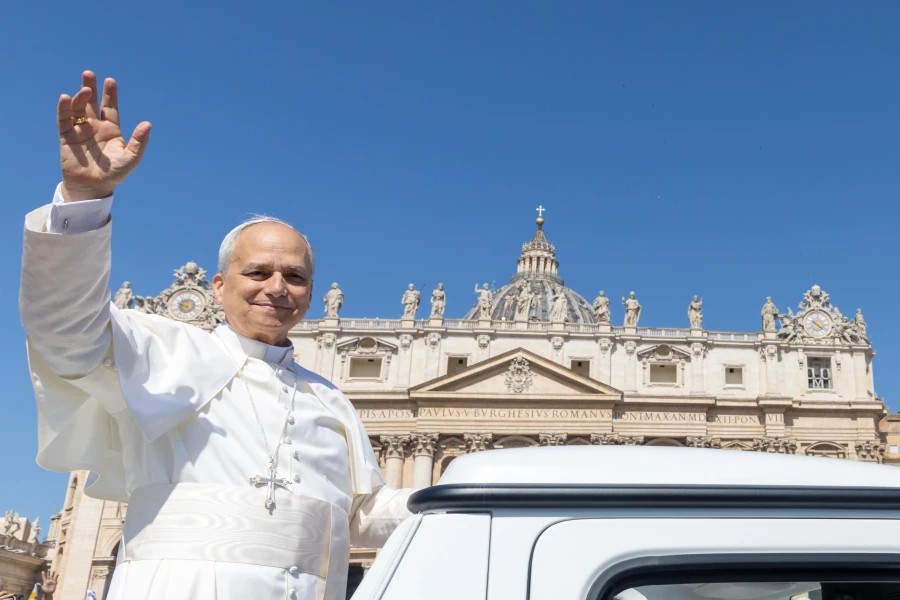
The cassock also has a detachable elbow length cape, also in white, called a pellegrina (or simar). A pellegrina is usually reserved to bishops, archbishops, cardinals, and the pope, black with purple trim for bishops and archbishops, scarlet for cardinals, and white for the pope.
Mozzetta: An elbow length cape which falls on the shoulders and is worn over a rochet as a sign of authority. One of the traditional liturgical vestments for some priests, canons, abbots, bishops, archbishops, cardinals, and the pope when in choir dress, typically worn during public prayer and when not celebrating or concelebrating the Eucharist, the color of the mozzetta matches the rank of the cleric – purple or amaranth for bishops and archbishops and scarlet for cardinals, for example. Pope Francis eschewed the use of the mozzetta on the night of his election, but Pope Leo XIV restored the custom and has worn it frequently since. The mozzetta is also accompanied by a stole when liturgically appropriate, scarlet in color with ornate gold embroidery.
Chasuble: A chasuble, its name derived from the Latin for “little house,” is the outermost liturgical vestment worn over the alb and stole and changes color to reflect the Liturgical Year. Historically the liturgical garment represents the “yoke of Christ” and is a symbol of charity. There have been many forms of chasubles over the centuries. The earliest form of liturgical chasuble resembles the so-called monastic style, a full-cut roughly oval garment often falling to the celebrant's shoe tops and at times furnished with a hood. One of the most dominant styles was the so-called fiddleback, which appeared in the late 16th century. Pope Leo XIV has worn several notable chasubles, including one that was used by Pope St. John Paul II.
White sash: Also known as a “fascia,” the sash is worn over the cassock just above the waist and is typically made of silk or linen. The article of clothing represents the Pope’s submission to Jesus’ call to serve and protect Mother Church. Other prelates, such as monsignors, bishops, archbishops, and cardinals also wear a fascia of appropriate color for their rank. The pope’s fascia has gold trim at the bottom. Traditionally, the papal coat of arms can be seen at the bottom. It remains to be seen if Pope Leo XIV will embrace this custom.
Zucchetto: A white skullcap that the Pope wears is a symbol of God’s protection. The name zucchetto is derived from the Italian for “pumpkin,” and it is also known as a “solideo” or “pileolus” — the skullcap covers the back of the Pope’s head. It originated from the practical need for those who had received the tonsure (the shaving of the hair on the top of the head to signify entry into the religious life) to have a covering for warmth. Over time, it assumed various colors as a means of signifying the rank of the cleric or prelate. Pope Paul VI in 1968 made the use of the zucchetto mandatory for members of the hierarchy, although other clerics, including priests, may use it. The pope’s zucchetto is white.
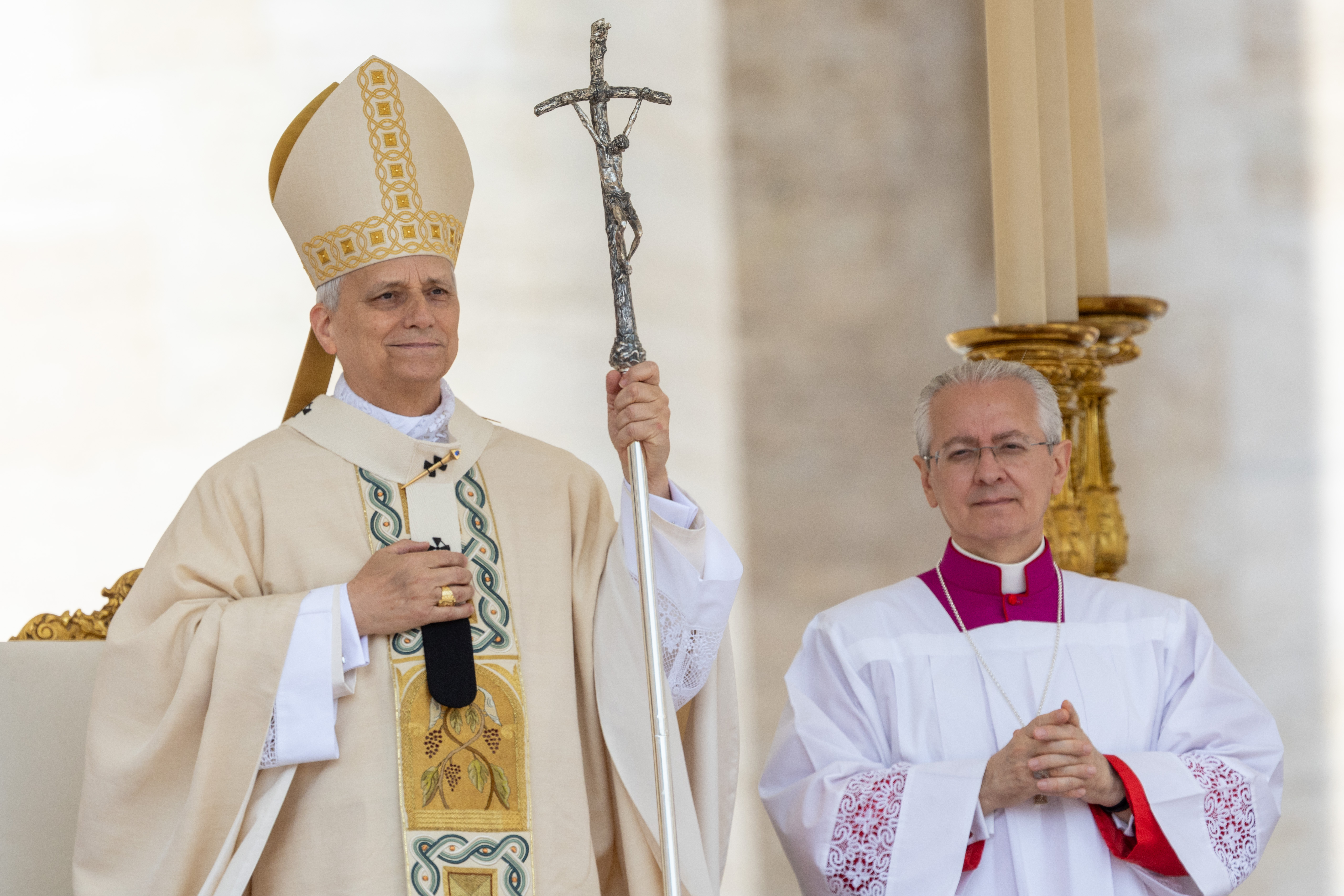
Mitre: A Roman Pontiff also wears this traditional liturgical headdress. The name derives from the Greek, mitra, denoting a headband or diadem and is connected to the distinctive folded hat of the High Priest in the Old Testament. A symbol of authority and dignity, the mitre is one of the traditional elements on the regalia of bishops. The design has evolved over the centuries becoming customary for bishops by the 11th century. It presently has a triangular shape, with two strips of cloth hanging from behind, called infulae. The pope wears the mitre for liturgical celebrations, and Pope Leo XIV has his coat of arms on the infulae. The papal coat of arms also contains a mitre. Traditionally, it was adorned with the papal tiara, but in 2005 Pope Benedict XVI replaced it with the mitre to emphasize the pastoral role of the pope and his close relationship with the bishops.
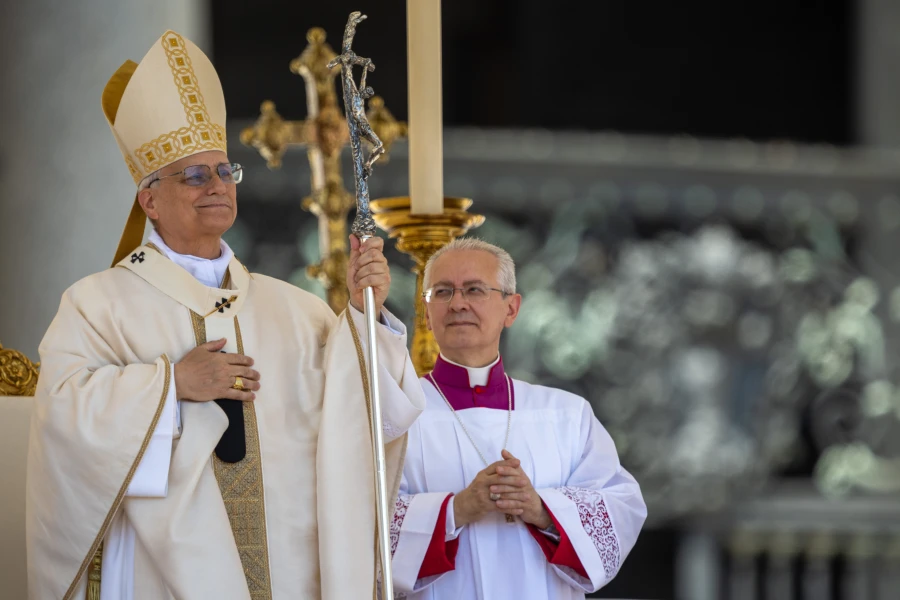
Pallium: A symbol of unity, fidelity to Christ, and the authority of the pope over the entire Church, the pallium is also worn by metropolitan archbishops to designate their jurisdiction. Traditionally, the pallium is a white wool band worn around the neck, adorned with six black silk crosses and three metal nails, in remembrance of the Passion of Jesus Christ. The use of the pallium evolved over the centuries and was for a time worn exclusively by the pope. By the fifth century, it was worn by the pope and those distinguished by him, eventually being granted to metropolitan archbishops. The pallia are made each year the wool of freshly sheared lambs on the feast of St. Agnes (Jan. 21). They are then placed in a silver casket near St. Peter’s tomb beneath the high altar of St. Peter’s Basilica. They were traditionally blessed and granted to metropolitan archbishops on June 29, the Feast of St. Peter and St. Paul by the pope. Pope Francis ended that custom in 2015, after which the blessed pallia were bestowed on metropolitans in their home archdioceses.
Papal Ferula: A pastoral staff carried during liturgical celebrations, it typically has a knob on top that holds a crucifix or cross mounted just above the staff. It is not to be confused by a crosier, the shepherd staff. The ferula signifies the unique office of the Bishop of Rome and his leadership as supreme pastor over the entire Church. Pope Leo XIV carried the ferula of Pope Benedict XIV on May 9 during his first Mass as pope. He then was seen holding a silver ferula designed by Lello Scorzelli that Pope St. Paul VI had first used in 1965 to close the Second Vatican Council. That ferula, however, is most often remembered as part of Pope St. John Paul II’s pontificate. Even in the latter years of his life, the late pontiff would rest upon it while convalescing in his room.
Alb: A long white linen vestment with sleeves, it symbolizes the purity of heart that the priest brings to the altar. According to the General Instruction of the Roman Missal:
“The sacred garment common to ordained and instituted ministers of any rank is the alb, to be tied at the waist with a cincture unless it is made so as to fit even without such. Before the alb is put on, should this not completely cover the ordinary clothing at the neck, an amice should be put on. The alb may not be replaced by a surplice, not even over a cassock, on occasions when a chasuble or dalmatic is to be worn or when, according to the norms, only a stole is worn without a chasuble or dalmatic.”
Pectoral cross: Typically a plain Latin cross of gold suspended round the neck by a gold chain or a cord of silk and gold, the suspension of the cross over the heart is significant. Traditionally hanging by a gold cord, the cross is worn over the mozzetta near the pectoral muscle that protects the heart in a gesture of sorrow for sin — or “peccatum” in Latin. According to Bishop Austin Anthony Better of Helena, Montana, it signifies beating one’s breast since it is through the crucifixion of Jesus that hearts are reconciled to God.
The Fisherman’s Ring: Placed on the Pope’s finger following his election as a sign of his reign as the new pontiff and successor of St. Peter, the fisherman’s ring is one of several rings typically worn by the Roman pontiff. The ring authenticates the faith and symbolizes the duty with which the Pope was entrusted. The accessory takes its name from its image of St. Peter as a fisherman, which became the standard design around the mid-15th century. Pope Leo XIV became emotional when presented with the ring during his Inaugural Mass.
The first record of the ring’s use was on two letters of Clement IV in 1265 and 1266. It was used as a wax seal in private letters in place of the official lead seal used for solemn papal documents.
In 1842, the use of the ring and wax seal was replaced by a stamp, but each pope still receives a unique Ring of the Fisherman at the start of his papacy.
A red stole: With golden embroidery, a form of the liturgical garment worn over the shoulders by bishops, priests, and deacons. The pope’s stole represents the pope’s priestly consecration and responsibility to lead the Church as a good shepherd who carries his sheep on his shoulders and bears the yoke or “sweet burden” of Jesus Christ. From the time of Pope Benedict XV (1914-1922), popes have worn the Stole of the Four Evangelists, embroidered in gold with the images of Matthew, Mark, Luke, and John. To preserve the original stole, a copy was made under Pope St. John Paul II. It has been used by the popes since, including Pope Leo XIV.
A pair of red leather shoes has been used by several popes over the centuries and has its origins in the early Church and the ancient Roman Empire. The color represents the passion of Jesus and the blood of martyrs, according to Liturgical Arts Journal founder Shawn Tribe.
CNA reporting contributed to this story.

Alyssa Murphy Alyssa Murphy is the Register's Managing Editor of Digital Assets. Starting her career on the airwaves in San Francisco, she has worked in all facets of media. Alyssa enjoys writing and covering stories that inspire and uplift. Register readers may be familiar with her voice from EWTN radio's Morning Glory. Alyssa currently lives in New Jersey just outside Manhattan with her husband Andrew and young daughter, Annabelle.